South Florida • The Florida Everglades
The Godfather of the Everglades
The stories, people, machines and history that shaped South Florida’s River of Grass.
History • Legends • Wildlife • Airboats • Conservation
The Archive Opens
Every legend has a story.
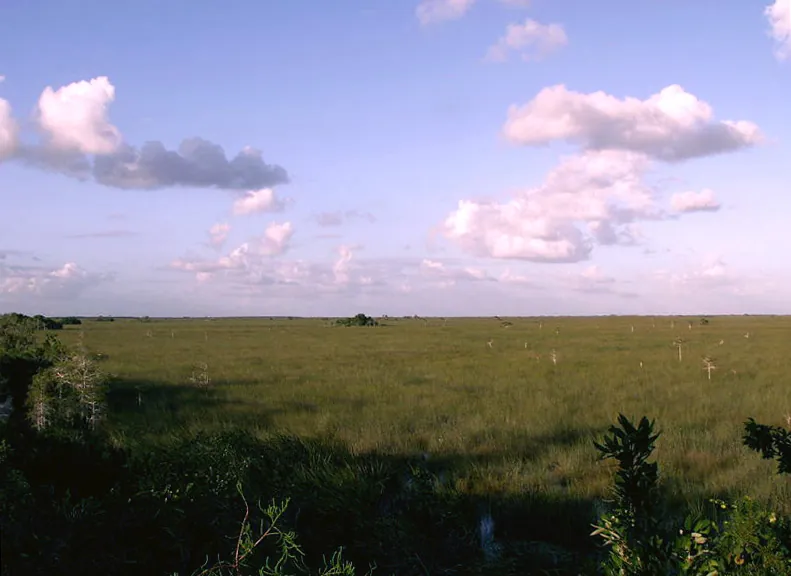
Before highways crossed South Florida, before subdivisions reached westward, there was water. Mile after mile of sawgrass moved beneath an enormous Florida sky.
Godfather of the Everglades documents the people who shaped that country — pioneers and tribal nations, guides and hunters, airboat builders, scientists and the conservationists who fought to save it — along with the wildlife, the machines and the events that changed the River of Grass. Every story is sourced. Where the record is thin, we say so.
The Everglades is not a swamp that stands still. It is a river — a slow one, a wide one, and older than any road that crosses it.
Chapter One
The River of Grass
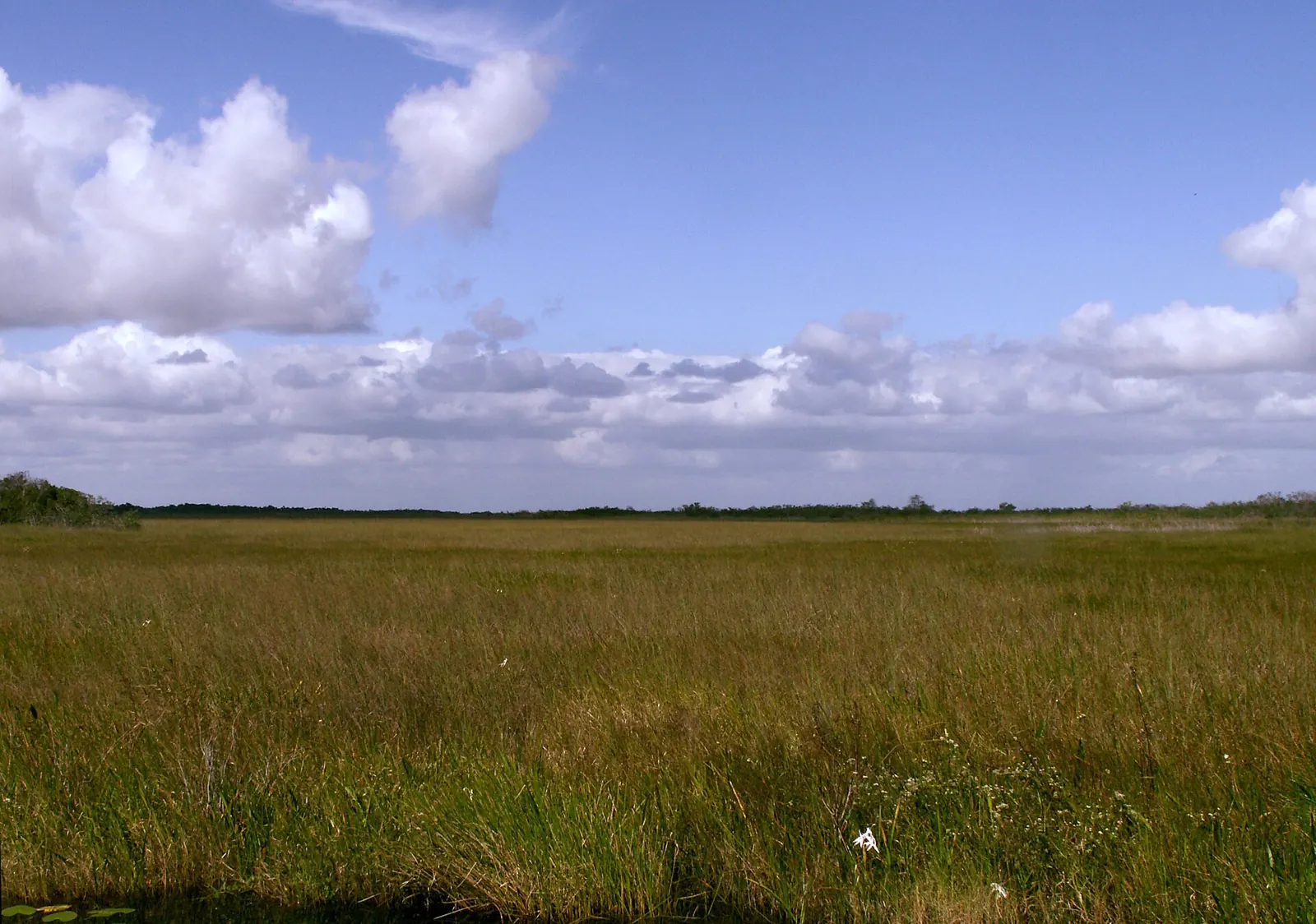
Sawgrass prairie, Everglades. Photo: Moni3, Wikimedia Commons, CC BY 3.0.
Call it a swamp and you miss the point. The Everglades moves.
A century ago, rain that fell on central Florida ran down the Kissimmee River into Lake Okeechobee, spilled over the lake’s southern rim and crept south through the sawgrass all the way to Florida Bay. There was no channel. The water moved as a thin, slow sheet across a nearly flat limestone floor — what scientists call sheetflow.
That movement built everything else: the sawgrass marshes and the deeper sloughs, the tree islands that rise like ships from the prairie, the wading-bird colonies and the fish that feed them. When people began draining the marsh for farms, towns and flood control, the river slowed, shrank and broke apart. Much of the modern story — the national park, the canals, the restoration — is an argument about that water.
~11,000
square miles of South Florida once covered by the Everglades — SFWMD
≈ ½
of the historic Everglades remains after a century of drainage — SFWMD
1.5M
acres protected today in Everglades National Park — National Park Service
1979
the year UNESCO inscribed Everglades National Park as a World Heritage Site — UNESCO
Chapter Two
The People Who Shaped the Everglades
Tribal nations who made the Glades their home. A landscape architect who would not let the idea of a park die. A writer who gave the place its name in the public mind. And the guides, hunters and airboat men whose stories were mostly never written down.
1866 – 1951
Ernest F. Coe
A landscape architect who arrived in Miami in 1925 and spent the rest of his life campaigning for a national park in the Everglades.
Documented history
1890 – 1998
Marjory Stoneman Douglas
Journalist and author of The Everglades: River of Grass (1947), and one of the region’s most persistent defenders.
Documented history
Before the maps · Today
Seminole & Miccosukee
Nations that endured three wars with the United States and remain in the Everglades today. The Miccosukee Tribe won federal recognition in 1962.
Documented history
Oral histories · In progress
Guides, Hunters & Airboat Men
The working people of the Glades. We are recording their stories now — first-hand, attributed and clearly labeled.
Oral history
Chapter Three · Airboat History
The Machine That Changed the Glades
Nothing under the water. That is the whole trick.
An airboat is a flat-bottomed hull pushed by an aircraft-style propeller spinning in open air. With no propeller or rudder below the waterline, it can skim across inches of water, over sawgrass and through marsh where an ordinary outboard would foul in a few yards. For hunters, frog-giggers, researchers, wildlife officers and, later, visitors, it opened country that had been reachable only by pole, canoe or foot.
Waterline shown dashed. Select a part to read how it works.
1 Engine
Mounted high and aft, behind the driver. Early builders used surplus aircraft engines; automotive V-8s later became common because they were cheaper and easier to service.
2 Propeller
An aircraft-type propeller pushes air, not water, backward. That thrust drives the hull forward — which is why the boat can run where there is barely any water at all.
3 Prop cage
The round steel guard around the propeller keeps hands, branches, birds and gear out of the blades. It is the airboat’s signature silhouette.
4 Rudders
Tall vertical rudders sit in the propeller’s blast, above the water. Turning them redirects the airflow and swings the stern. With no brakes and no reverse on most boats, the driver steers and slows by reading wind, water and momentum.
5 Hull
Flat, wide and shallow-draft — aluminum or fiberglass on most modern boats. A flat bottom lets the boat plane across the surface and slide over wet grass and mud.
6 Driver position
The driver sits high, in front of the engine, to see over the sawgrass and spot shallows, wildlife and other boats. A control stick works the rudders; a foot pedal works the throttle.
Sources disagree
Who built the first airboat?
Popular histories most often credit Alexander Graham Bell’s team, which experimented with a propeller-driven craft in Nova Scotia around 1905, and aviation pioneer Glenn Curtiss, who is said to have built an air-driven boat for hunting in Florida around 1920. By the 1940s, Florida builders were turning them out commercially. We have not yet confirmed these accounts against primary sources, so we present them as the commonly told version — not the final word.
Chapter Four
A Century in the Everglades
Select a year to open the record. Each entry names its source.
Early 1900s Draining the River of Grass
State-backed drainage, canals and levees begin converting the northern Everglades to farmland and making room for towns. Over the following century, drainage for agriculture, development and flood control cuts the Everglades to roughly half its historic size.
1916 Royal Palm State Park
Florida creates Royal Palm State Park — about 4,000 acres around Paradise Key — the first protected area in the Everglades. It would later become part of the national park.
1928 The Tamiami Trail opens
After thirteen years of construction begun in 1915, the road between Tampa and Miami opens across the Everglades in April 1928. It gives the region its first cross-state highway — and places a long dam across the natural southward flow of water. The same year, Ernest F. Coe’s Tropical Everglades National Park Association is organized.
Sources: Miccosukee Tribe of Indians of Florida; National Park Service
1934 A national park is authorized
On May 30, 1934, Congress authorizes Everglades National Park. The law sets the goal, but no land or money yet — assembling the park will take another thirteen years.
1947 River of Grass and the park’s dedication
Marjory Stoneman Douglas publishes The Everglades: River of Grass. On December 6, 1947, President Harry S Truman dedicates Everglades National Park at a ceremony in Everglades City.
Source: National Park Service
1962 Miccosukee federal recognition
In January 1962 the United States formally recognizes the Miccosukee Tribe of Indians of Florida, whose homelands lie along the Tamiami Trail.
1967 Endangered: the alligator and the snail kite
Hunting and habitat loss put the American alligator on the endangered list in 1967. The Everglades snail kite is listed the same year. The alligator recovers and is removed from the list in 1987.
Sources: National Park Service species profiles — American alligator, snail kite
1979 World Heritage Site
UNESCO inscribes Everglades National Park on the World Heritage List for its ecosystems and biodiversity. Because of damage to its water supply, it has since been placed on the List of World Heritage in Danger (1993–2007, and again from 2010).
Source: UNESCO World Heritage Centre
2000 The restoration plan
Congress approves the Comprehensive Everglades Restoration Plan (CERP) in the Water Resources Development Act of 2000 — a decades-long federal–state effort to get more clean water flowing south again.
Source: Everglades Restoration Initiatives (South Florida Ecosystem Restoration Task Force)
Today The river, still being argued over
Restoration projects continue across South Florida. UNESCO estimates that water inflows to the park have fallen by roughly 60 percent from pre-drainage levels — which is why the fight over the water is also the fight over the future of the place.
Source: UNESCO World Heritage Centre
Chapter Five
Legends of the Glades
The Everglades has always collected stories — some true, some half-true, some told only after dark at the fish camp. We tell them all. But every one wears a label, so you always know which kind you are reading.
Documented History
Confirmed by primary records or authoritative institutions. Sources cited.
Oral History
A first-hand account from a named person, recorded and attributed. True to the teller’s memory.
Local Legend
A story widely told in the region, possibly rooted in real events, not confirmed.
Folklore
Traditional tales and beliefs. Valued as culture, not offered as fact.
Unverified Story
Reported to us or found in print, still being checked. May change.
Chapter Six
Wildlife of the Everglades
The animals of the Glades are not scenery. They are the clearest record of what has happened to the water.
Alligator mississippiensis
American Alligator
A keystone species. In the dry season, “gator holes” hold water when little else does, sheltering fish, turtles and birds.
Crocodylus acutus
American Crocodile
South Florida is the only place where crocodiles and alligators live side by side — crocodiles in the salty and brackish coast.
Puma concolor coryi
Florida Panther
Once down to an estimated 20–30 animals in 1995, the panther remains endangered and prefers dry upland forest to open marsh.
Rostrhamus sociabilis plumbeus
Everglades Snail Kite
A hawk that eats almost nothing but apple snails — so when the marsh water fails, the kite fails with it.
In the field notebook next: great blue heron · anhinga · white-tailed deer · turtles · snakes · fish · native plants
Chapter Seven · The Records Room
The Everglades Archives
Photographs, maps, clippings, documents and recorded memories — each catalogued with its source, approximate date, copyright status and the context that makes it matter. We publish only material that is public domain, licensed, donated or our own.
- Drawer IHistoric Photos
- Drawer IIMaps
- Drawer IIINewspaper Articles
- Drawer IVAirboats
- Drawer VPeople
- Drawer VIDocuments
- Drawer VIIVideos
- Drawer VIIIOral Histories
- Drawer IXHistorical Advertisements
- Drawer XOld Florida
Have a family photograph, a letter or a recording? The archive grows through donations.
From the Journal
Latest Stories
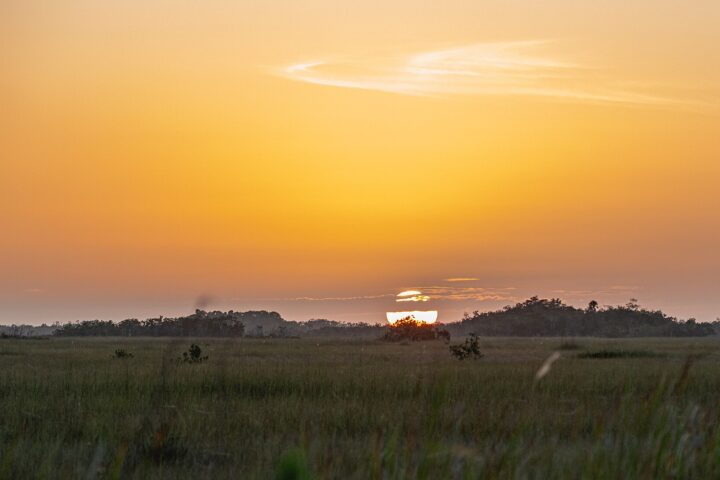
Our Mission: There Is Only One Everglades
Preserving the past. Protecting the present. Inspiring the future. Why Godfather of the Everglades exists — and why there is only one Everglades.
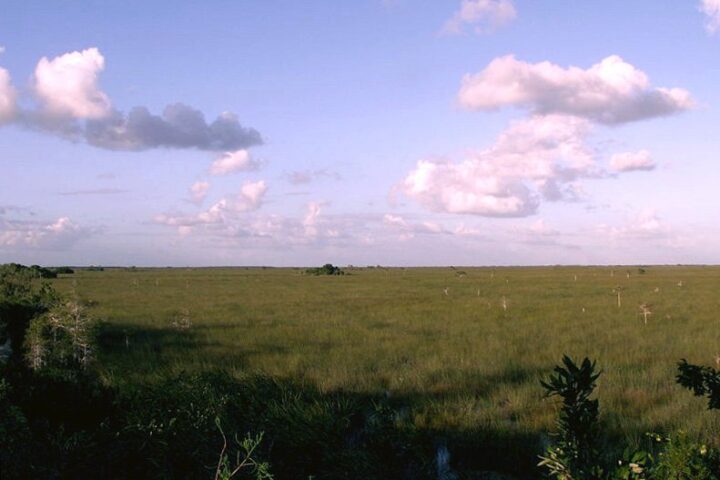
Why the Everglades Is a River, Not a Swamp
Stand in the sawgrass and the water looks still. It isn’t. How the Everglades moves — and why that single fact explains its history.
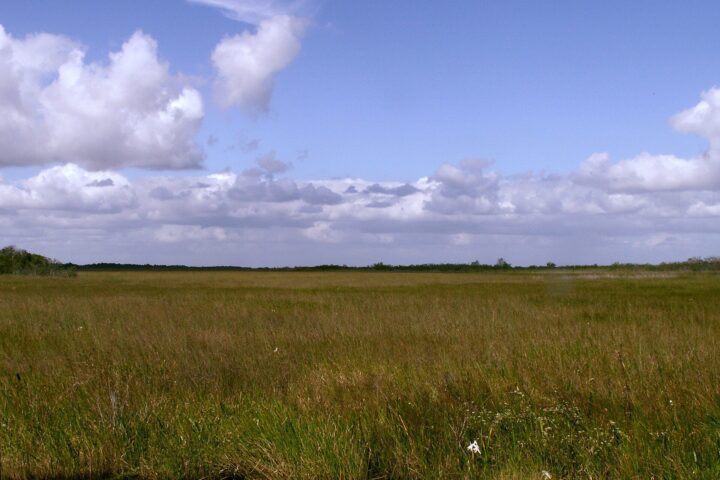
December 6, 1947: The Day the Everglades Became a National Park
It took nineteen years, two presidents, a stubborn landscape architect and a book about a river of grass. The long road to Everglades National Park.
Go Deeper
Explore the Everglades
The best way to understand the River of Grass is to stand at its edge. Start with the people who look after it.
Visit
Everglades National Park
Official visitor information, conditions and safety from the National Park Service.
Culture
Miccosukee Tribe of Indians of Florida
The tribe’s history, told by the tribe, from its homelands along the Tamiami Trail.
Restoration
Everglades Restoration
Progress on the federal–state plan to send clean water south again.

Follow the Story
New chapters are added as the research is done — people, places, machines and the memories of those who were there. If you have a story, a photograph or a document from the Everglades, we would like to hear from you.