
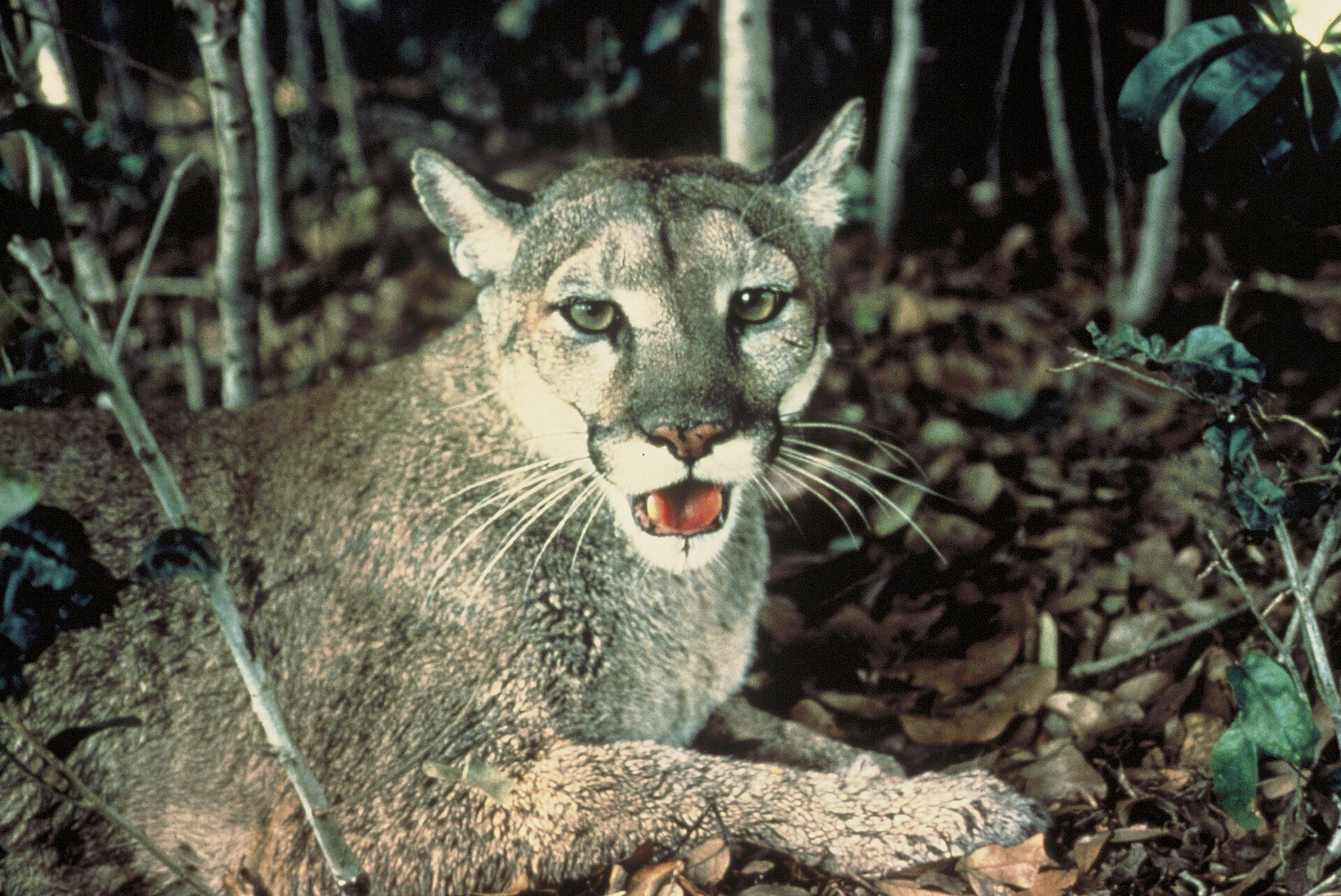
By 1995 the Florida panther population was estimated at just 20 to 30 animals. It survives today because people intervened.
Species
Puma concolor coryi, a population of puma — the same species known elsewhere as cougar or mountain lion.
Habitat
Despite its link to the Everglades, the panther prefers mature upland forest — hardwood hammocks and pinelands — to open marsh. It needs dry ground for resting and denning and enough prey to hunt.
Diet
Strictly carnivorous. About 90 percent of its diet is feral hog, white-tailed deer, raccoon and armadillo; it occasionally takes rabbits, rats, birds and even alligators.
Conservation status
Endangered. The National Park Service reports the population was nearly extinct by the mid-1950s, and fell to an estimated 20–30 animals in 1995 before a genetic restoration program. Current population figures differ by source and survey year — the Park Service profile gives fewer than 100, while more recent state estimates are higher — so we are confirming the latest official count before publishing one. Its main threats are habitat loss and fragmentation from development and agriculture, followed by vehicle strikes, inbreeding, disease, mercury and fights between males over territory.