
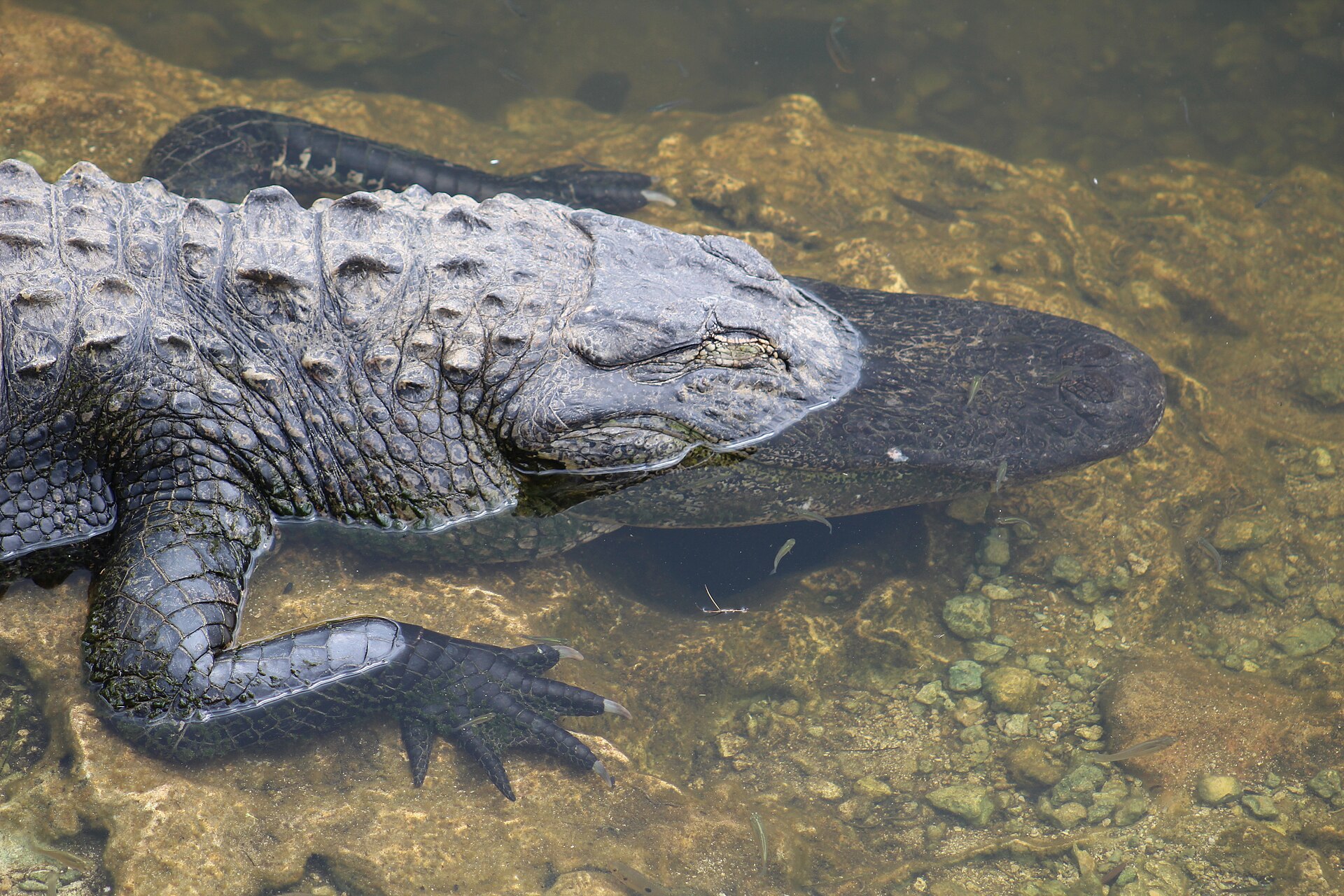
In the dry season, when the marsh shrinks back, the alligator’s hole may be the only water for a long way. Fish crowd into it. Turtles and birds follow. That is why the National Park Service calls the alligator a keystone species.
Species
Alligator mississippiensis. Young alligators carry bright yellow cross-bands that fade as they grow.
Size
Males can reach 13 to 15 feet; females average about 10 feet. South Florida alligators tend to be smaller.
Habitat
Freshwater marshes and swamps, rivers, lakes and smaller bodies of water. Alligators can tolerate salt water for brief periods and dig burrows for shelter and dormancy in the dry season.
Diet
Young alligators eat insects and other small invertebrates, small fish and frogs. Adults take fish, turtles, small mammals, birds and reptiles. They feed only when the water is warm — above roughly 68 to 73°F.
Role in the Everglades
Alligator holes hold water year-round and become refuges for wildlife during the dry season. Nesting activity by females also helps build peat.
Nesting
Females mature at about six feet long and build mound nests roughly 3.5 feet high and twice as wide. Eggs incubate for 58 to 63 days, and nest temperature decides the sex of the young: warmer nests (about 90–93°F) produce males, cooler ones (about 82–86°F) females.
Conservation status
Hunting and habitat loss put the alligator on the endangered species list in 1967. With hunting outlawed, populations recovered, and the species was removed from the list in 1987.
Safety
The National Park Service notes that most alligator attacks on people are attributed to illegal feeding. Never feed an alligator, keep your distance and follow posted rules.